
Surgery
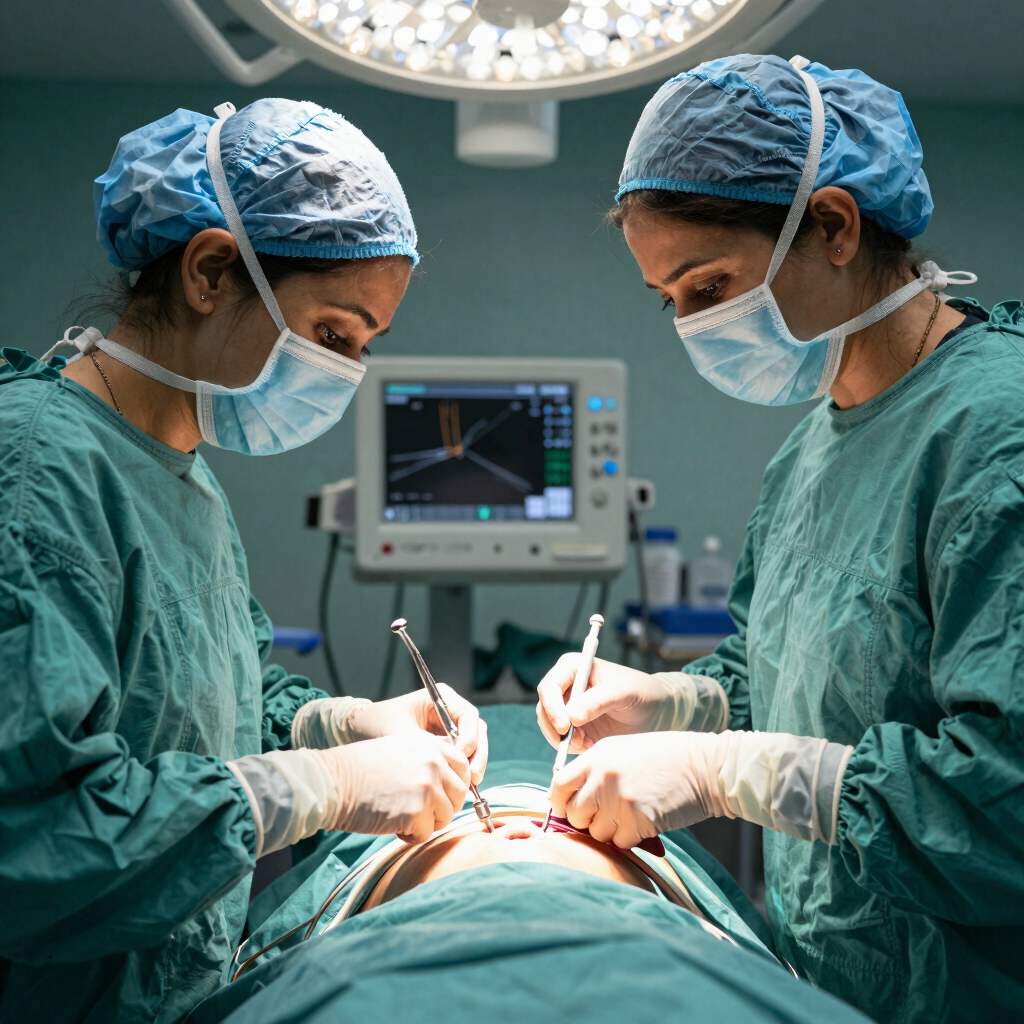
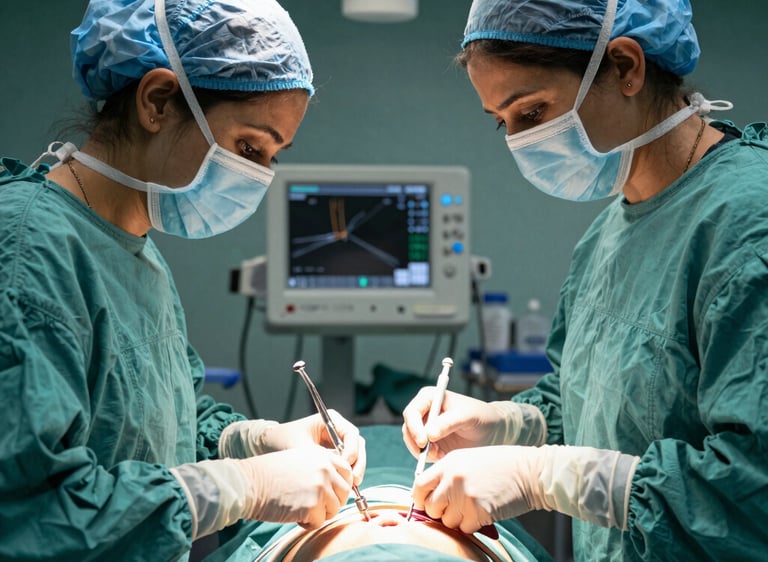
Women’s health is vital because it affects families and communities—timely gynaecologic surgery can treat disease, relieve pain, and restore reproductive and overall wellbeing. Access to safe, appropriate surgical care preserves fertility, prevents complications, and improves quality of life across a woman’s lifespan.
Common Gynecologic Surgeries
Hysterectomy:
Removal of the uterus; may be total (uterus + cervix) or subtotal (uterus only). Performed for fibroids, heavy bleeding, prolapse, cancer, or severe infection. Approaches: abdominal, vaginal, or laparoscopic/robotic.
Myomectomy
Surgical removal of uterine fibroids while preserving the uterus; indicated for symptomatic fibroids in women desiring fertility. Can be open, laparoscopic, or hysteroscopic depending on fibroid location.
Oophorectomy
Removal of one or both ovaries; done for ovarian cysts, torsion, cancer risk reduction, or severe disease. If both removed, induces surgical menopause.
Salpingectomy
Removal of one or both fallopian tubes; indicated for ectopic pregnancy, hydrosalpinx, infection, or as sterilization. Often combined with oophorectomy or hysterectomy.
Tubal ligation
Permanent contraception by blocking, cutting, or removing fallopian tubes. Reversal is possible but not always successful
Cystectomy (Ovarian cystectomy)
Excision of benign ovarian cysts while preserving ovarian tissue; aims to maintain fertility and ovarian function
Endometriosis surgery
Laparoscopic removal or destruction of endometriotic implants, adhesions, and endometriomas to relieve pain and improve fertility
Hysteroscopy (diagnostic and operative)
Endoscopic inspection of the uterine cavity; can remove polyps, submucosal fibroids, adhesions (Asherman’s), and correct uterine septum.
Dilation and Curettage (D&C)
Cervical dilation and scraping or suctioning of the uterine lining; used for retained products, abnormal uterine bleeding, or diagnostic sampling.
Repair of Pelvic Organ Prolapse (pelvic reconstructive surgery)
Procedures (vaginal or abdominal/laparoscopic) to restore support to prolapsed uterus, bladder (cystocele), or rectum (rectocele); may use native tissue or meshes (mesh use is regulated).
Ovarian Cyst Aspiration or Drainage
Minimally invasive drainage for selected cysts; often temporary and less preferred when definitive removal is indicated.
Laparotomy for Acute Gynaecologic Emergencies
Open abdominal surgery for uncontrolled bleeding, ruptured ectopic pregnancy, ovarian torsion, or severe infections.
Cervical Procedures (LEEP, conization)
Removal of abnormal cervical tissue (via loop electrosurgical excision or cold knife conization) for high‑grade precancerous lesions.
Adhesiolysis
Surgical division of pelvic adhesions (scar tissue) to restore anatomy and reduce pain or infertility.
Metroplasty (uterine septum resection)
Hysteroscopic correction of congenital uterine septum to improve fertility and reduce miscarriage risk.